modern mat

Inside the training

Refine how you lead.

Modern Mat is not a choreography binder. These are ideas from the actual curriculum — the philosophy, frameworks, and language you'll practice from Module 1 through practicum.

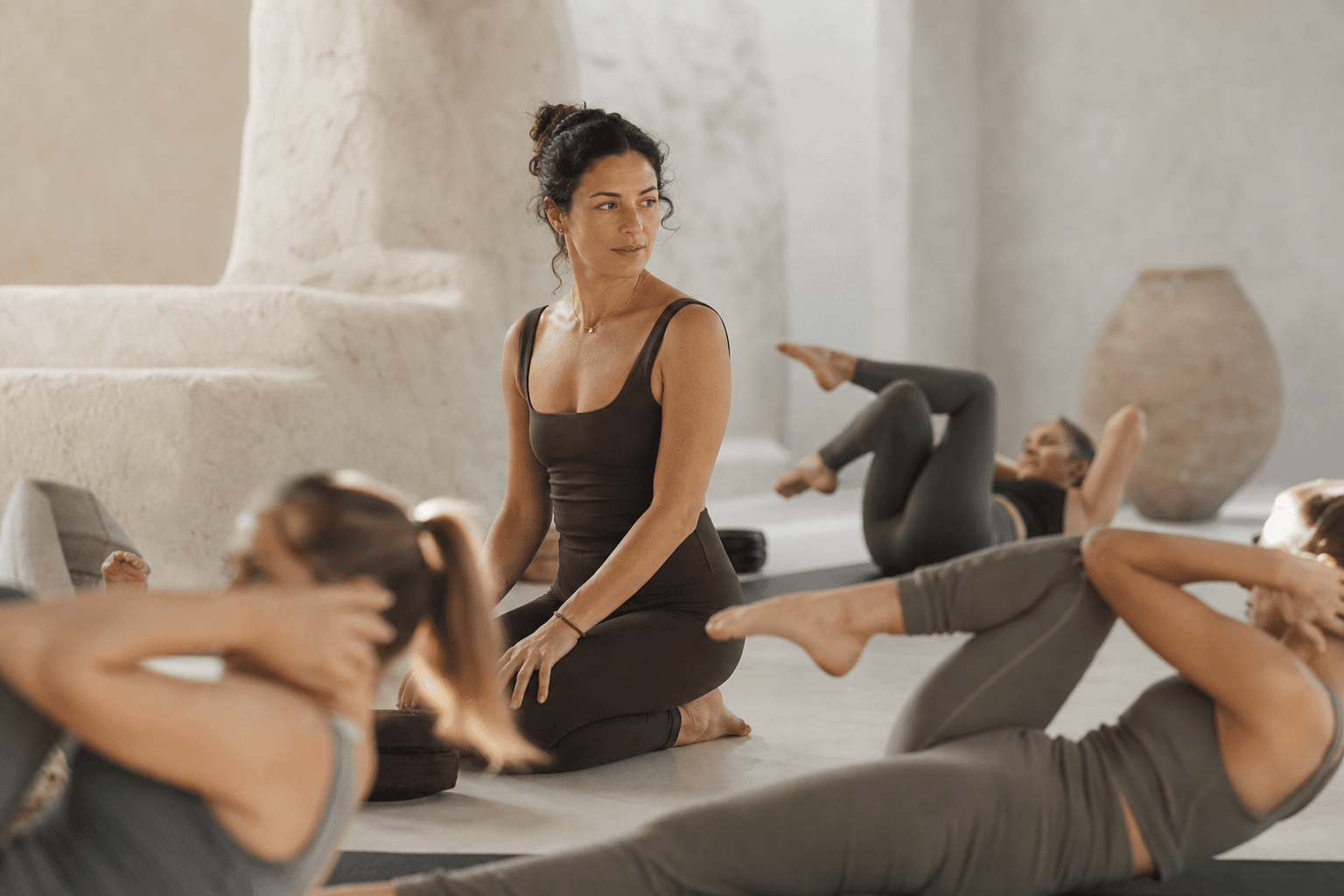
Instructor reading the room while leading a mat class

Module 1 — The Instructor Code

You're not just teaching movement. You're shaping how students relate to their bodies.

The wellness industry has a language problem. As a Modern Mat instructor, you choose words that build people up rather than remind them of what they're not.

Burn the fat
Build endurance
Flatten your stomach
Engage your deep core
Long and lean
Strong and stable
Work off the weekend
Move because it feels good

Module 2 — Why the Mat

The mat is not a limitation. It is the point.

The mat is not a prop. It's not the budget version of a reformer. It's the most fundamental, most honest teaching environment in movement education.

Every decision you make as a mat-based instructor flows from understanding why the mat deserves to be taught from — not apologized for.

Module 2 — Why the Mat

The credential is the proof. The craft is the thing.

The certificate matters — but the point is what you can do in a room: cueing, presence, reading a body in real time, and class design that takes students somewhere rather than just moving them around.

Module 2 — Classical Mat Pilates

Not Pilates rules — movement principles Pilates codified better than anyone else.

Centering, concentration, control, precision, breath, and flow apply to every mat-based modality you'll teach — sculpt, strength, and hybrid classes included.

Module 3 — Reading a Body

Five things you learn to read on every body.

Anatomy for decision-making in real time — not muscles memorized for a test. If something looks off, it probably is. You don't need to name the exact muscle to respond.

  • Alignment
  • Movement pattern
  • Compensation
  • Breath
  • Effort distribution
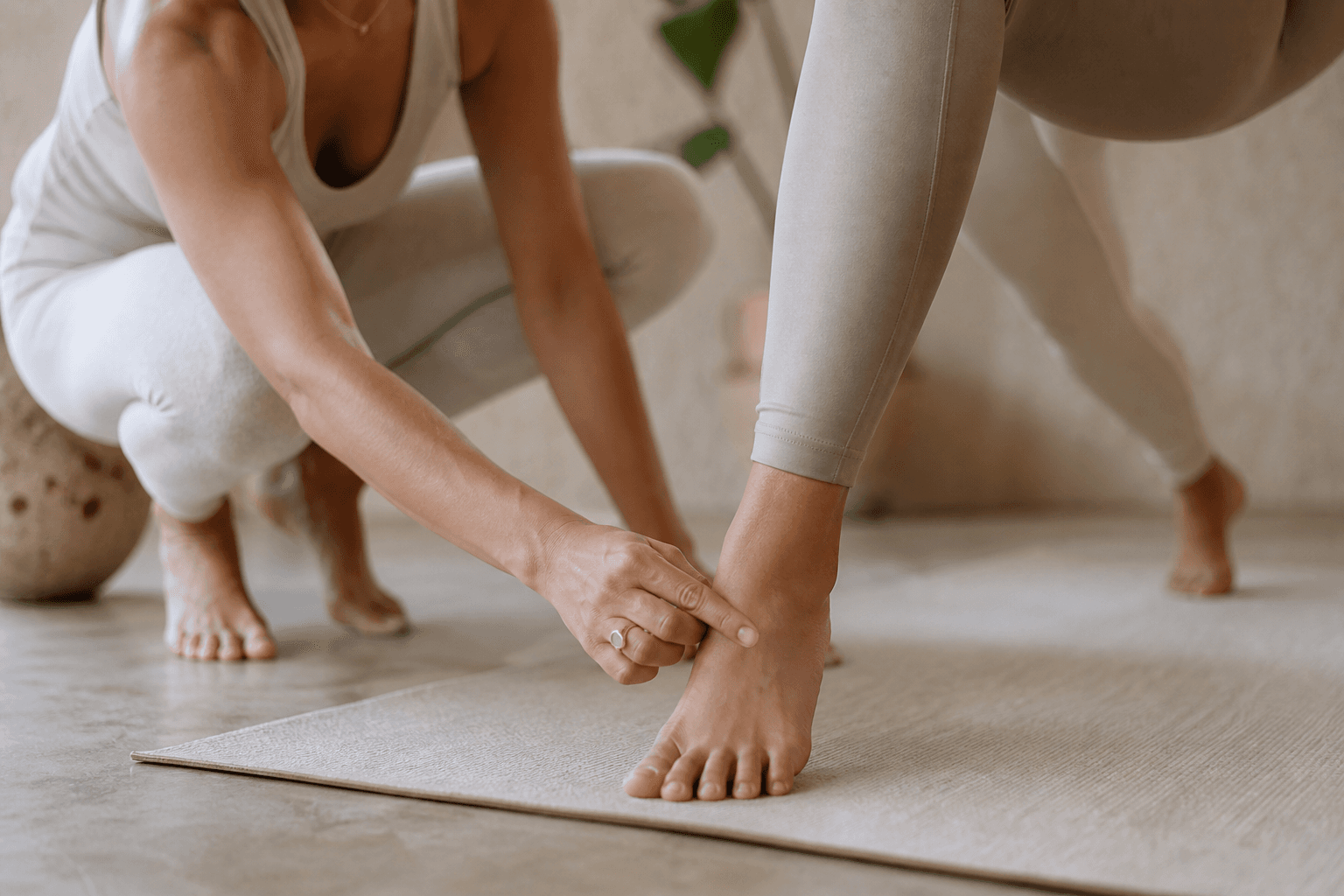
Close detail of hands and feet in precise mat work

Module 2 — Sculpt & Strength

Tired is easy. Adapted is the goal.

Sculpt builds muscular endurance — high reps, rhythm, sustained discomfort. Strength builds load tolerance — 6–12 reps, progressive overload, longer rest. Same mat. Same precision standards. Two ends of one continuum.

Module 6 — Class Design

A great class has a shape — not just a playlist.

Arrival → engagement → challenge → resolution

That's not just physiology — it's narrative. If you can't answer where the peak is and what resolves after it, the class doesn't have an arc yet.

Module 5 — Cueing

One cue, four layers — so mixed levels stay in one room.

The most sophisticated cueing skill is layering multiple types simultaneously. Start with two layers and build as your comfort grows.

  • Foundation — direction everyone needs
  • Sensation / imagery — deepens the work
  • Challenge — optional depth for advanced students
  • Modification — permission without singling out

Module 4 — Safety Mindset

Safety is a skill — not a personality trait.

Some instructors treat safety as caution — doing less, modifying everything, avoiding challenge. That's fear, not safety. Real safety is knowledge, observation, communication, and judgment — so you can teach confidently and refer when needed.