Mat-based movement certification
The curriculum
Ten modules — from mindset and mat foundations through cueing, class design, prenatal, business, and practicum — plus an appendix you can reference anytime. Module 2 is your movement toolkit: classical mat repertoire with a full teaching reference, sculpt pedagogy (including mat cardio), and strength programming. Sculpt and strength live inside Module 2; music and energy management inside Module 6. Each assessed module ends with work your mentor reviews.

You'll know which track you're on, who you are when you walk in the room, and have a teaching philosophy draft to guide you.
Welcome and program overview, the instructor code, teaching identity, multi-modal philosophy, and growth mindset.
- Welcome to Modern Mat & program overview
- The instructor code
- Defining your teaching identity
- The multi-modal instructor
- Growth mindset as teaching practice
- Module assessment — reflections and philosophy draft
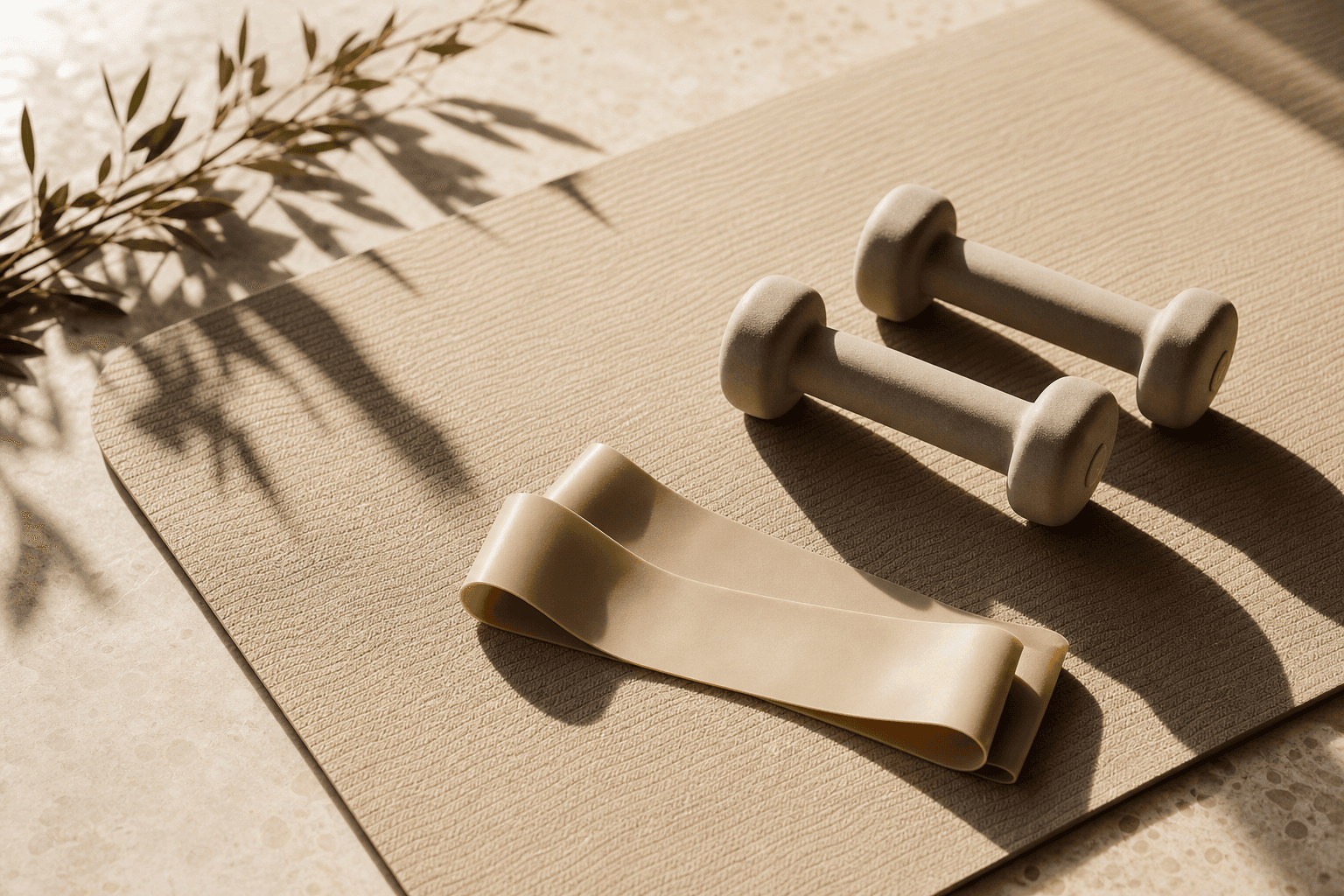
You'll know why the mat deserves to be taught from — and teach classical mat work, sculpt, and strength with precision, honest modality language, and real programming.
Why the mat, Return to Life and classical mat Pilates, sculpt class-building, strength on the mat, props, and how modalities connect.
- Why the mat
- Classical mat Pilates
- Sculpt
- Strength training on the mat
- Props & equipment
- Module assessment — reflections and movement practice
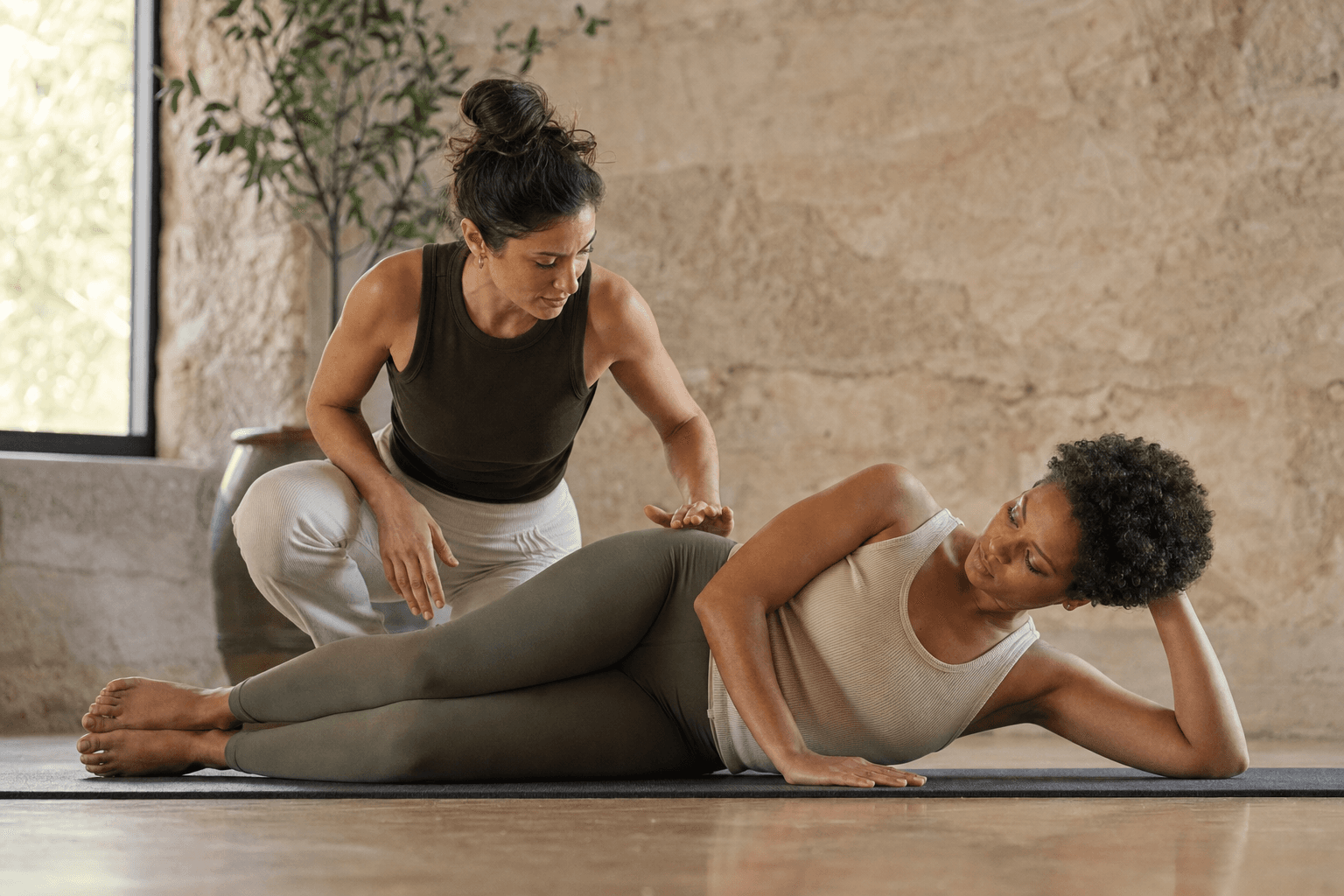
You'll read a body in real time and cue spine, core, hips, and shoulders with precision and safety.
Movement terminology, muscle and bone overview, spine, core, pelvic floor, hips, knees, shoulders, warm-up science, and building your observational eye.
- Anatomical & movement terms
- Overview of muscle & bone anatomy
- The spine — structure and spinal positions
- The core — deep stabilizers and cueing engagement
- Pelvic floor — what instructors need to know
- Hips & pelvis — lower body part 1
- Knees, ankles & feet — lower body part 2
- Shoulder girdle & upper body
- Warm-up & cool-down science
- Reading a body & observational eye
- Module assessment — reflections and observational practice
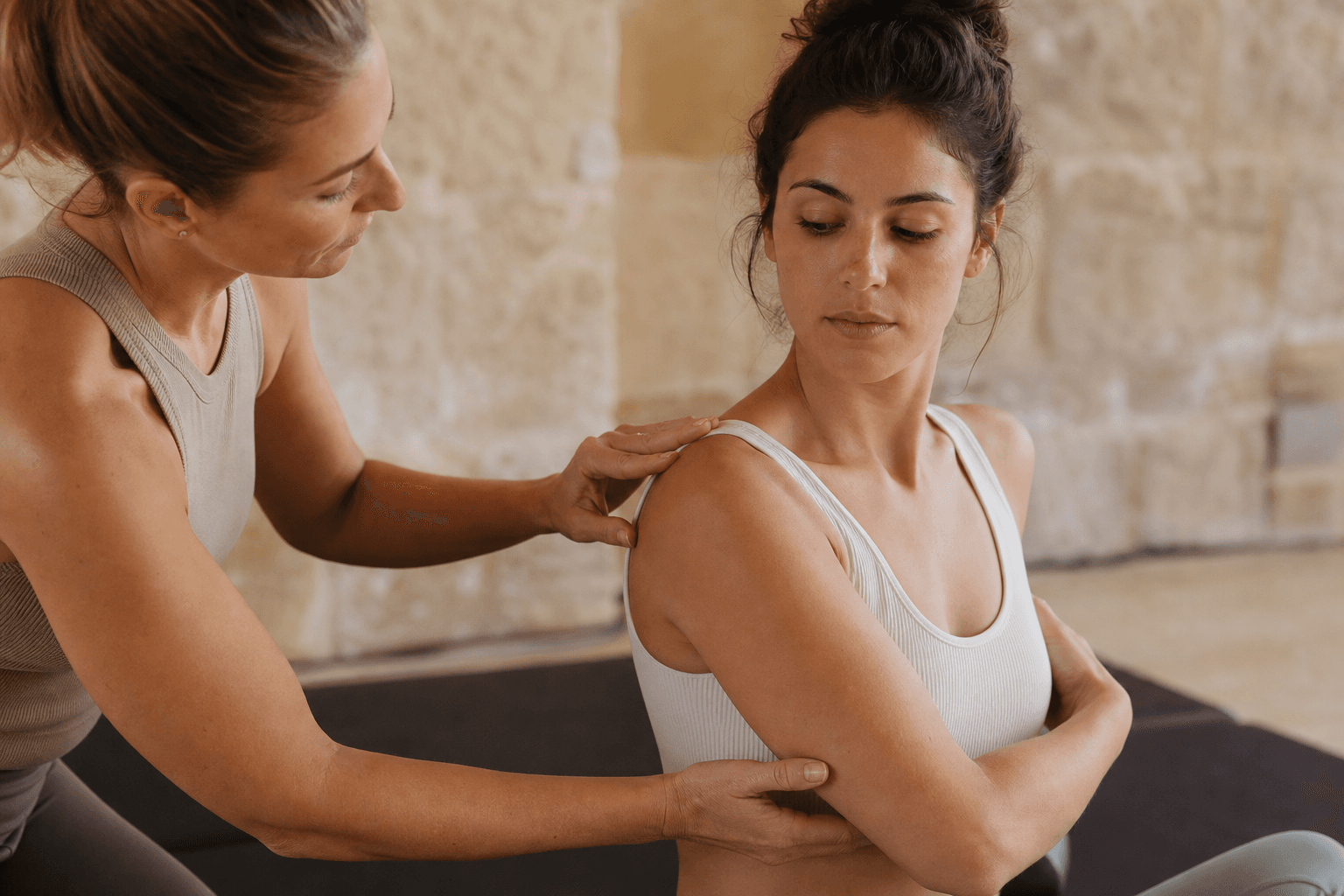
You'll modify in real time, know when to refer out, and teach safely without fear-based cueing.
Safety-first teaching — common injuries, contraindications, special populations, modifications, referral, and liability.
- Safety mindset & scope of practice
- Liability, documentation & intake form
- Common injuries in mat-based classes
- Contraindications — absolute & relative
- Special populations
- Modifying in real time
- When to refer out
- Module assessment — scenarios and intake form practice

You'll hold a room with your voice, presence, and adaptive cueing — in person or on camera.
Verbal and visual cueing, transitions, cueing timing, developing your teaching identity, feedback, camera teaching, and presence.
- The types of cues — verbal & visual
- Transitions & setup
- Cueing timing
- Developing your teaching identity
- Feedback and correction
- Teaching on camera vs. in person
- When things go wrong
- Module assessment
You'll design hybrid classes with intentional structure, modality integration, and the kind of experience that turns first-timers into regulars.
Class architecture, music and energy, formats, modality integration, pacing, mixed levels, series design, and retention.
- The anatomy of a class — including music, tempo & energy
- Class formats
- Combining modalities without losing integrity
- Rhythm-based vs. time-based vs. rep-based
- Teaching to mixed levels
- Building a series & student retention
- Module assessment
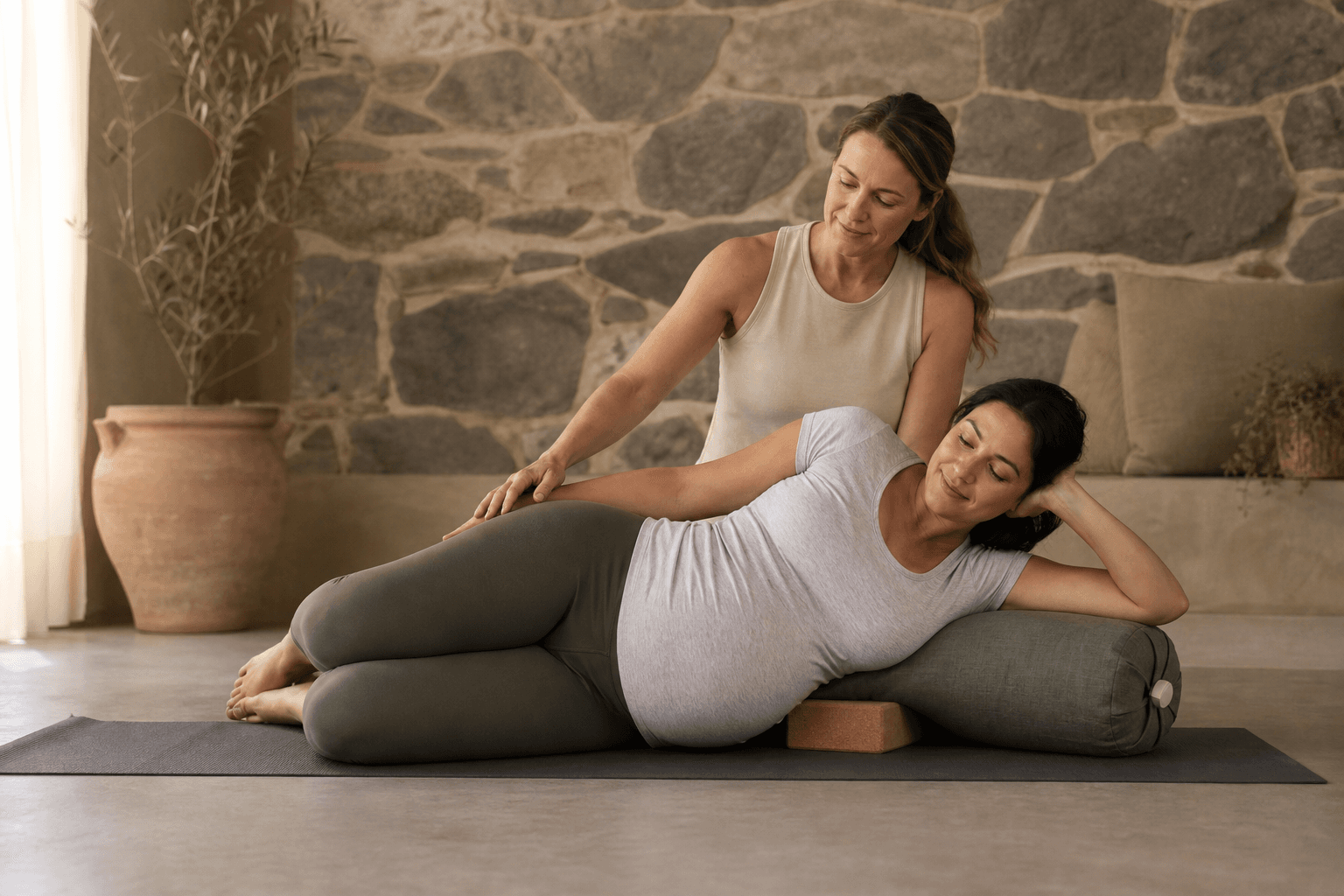
You'll teach prenatal and postpartum students with confidence, capability-focused language, and intelligent modifications built into every class.
Empowering prenatal and postpartum students with evidence-informed movement — trimester physiology, modifications, diastasis recti, the fourth trimester, and holding space.
- The pregnant & postpartum student in your class
- What's happening & what it means for movement
- Movement considerations — pregnancy, fourth trimester & postpartum
- Pelvic floor & core — diastasis recti
- Holding space
- Module assessment

You'll price your work, build a client base, and understand the business tradeoffs of a sustainable teaching practice.
Studio, private, and online income paths — pricing, client building, digital presence, online teaching, contracts, and long-term growth.
- The landscape — your options
- Pricing your services
- Building a client base from zero
- Building your digital presence
- The online teaching opportunity
- Contracts, liability & insurance
- Building toward something
- Module assessment
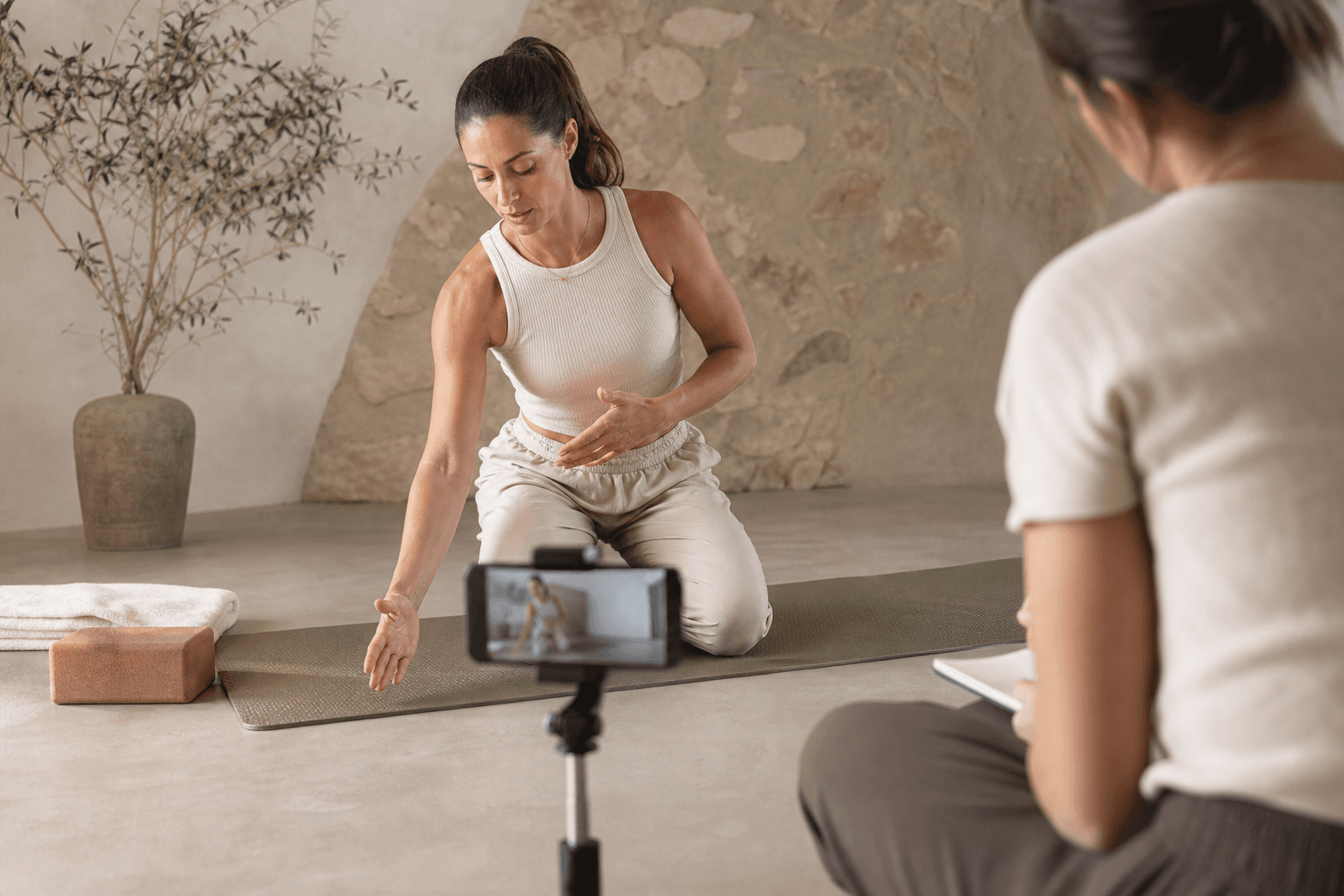
You'll graduate with peer teaching experience, a recorded capstone class, and Modern Mat certification.
Peer teaching rounds, written assessment, capstone class video submission, and certification.
- How the practicum works
- Peer teaching rounds
- Written assessment
- Capstone class & video submission
- What happens after you pass

You'll have ready-to-adapt class plans, a printable sequencing template, virtual setup checklist, and anatomy references at your fingertips.
Full class plans, printable sequencing templates, virtual teaching setup, and anatomy quick-reference — open throughout for practicum and beyond.
- Full class plans
- Sequencing template
- Technical setup for virtual
- Muscular anatomy reference
- Skeletal anatomy reference
Format
Two ways to complete Modern Mat
Same ten modules. Same mentor review. Same Modern Mat certification. Choose the track that fits how you learn and where you teach.
| Virtual Track | In-Person Cohort Track | |
|---|---|---|
| Modules | All 10 online, self-paced | All 10 online + two in-person weekends |
| Progression | Submit each module assessment to unlock the next | Same online progression + weekend application labs |
| Practicum | Two video peer teaching rounds + online written assessment + capstone video | Two in-person peer teaching rounds + capstone (recorded at Weekend 2 or submitted after) |
| Certification | Same Modern Mat certification | Same Modern Mat certification |
| Weekends | Not required | Weekend 1 and Weekend 2 (Sat–Sun) |
🖥 Virtual Track
- Complete Modules 1–9 in order at your own pace
- Submit each module assessment before the next module unlocks
- Module 10 (Appendix) — class plans, sequencing template, virtual setup checklist, and anatomy references — open throughout
- Module 9 practicum: two video peer teaching rounds with matched peers on the platform
- Online written assessment and 50-minute capstone class video submission
📍 In-Person Cohort
- Complete Modules 1–4 before Weekend 1
- Weekend 1 applies Modules 1–4 — movement labs, teaching practice, workshops
- Complete Modules 5–8 between Weekend 1 and Weekend 2
- Weekend 2 — cueing labs, two peer teaching rounds, and capstone class
- Online modules and assessments are required — weekends are the application layer
Practicum by track
🖥 Virtual Track
Two peer teaching rounds via video with structured feedback on the platform, an online written assessment, and a 50-minute capstone class video submission.
📍 In-Person Cohort
Two peer teaching rounds at Weekend 2, capstone class recorded Sunday afternoon (or submitted within two weeks), plus the same online written assessment and mentor review.
In-Person Cohort
Hybrid format
Two in-person weekends with self-paced online modules between. Complete Modules 1–4 before Weekend 1, Modules 5–8 between weekends, and the practicum (Module 9) at Weekend 2. The fully virtual track runs the same curriculum on your own timeline.
The themes below describe the shape of each weekend — not a minute-by-minute agenda. Labs and practicum timing may vary slightly by cohort size and venue.
Before Weekend 1
Modules 1–4 online and self-paced — mindset, mat foundations (including sculpt, strength, and mat cardio), anatomy, and safety. Complete before you arrive so Weekend 1 is applied work in the room, not first exposure to the curriculum.
12 contact hours
Weekend 1 — Foundation & Movement
Applied labs for Modules 1–4 — experience the work as students, then teach it. Optional preview of class-design concepts; full cueing and sequencing modules come online between weekends.
Saturday· 6 contact hours
Mat foundations, anatomy in practice, safety scenarios
- Welcome, cohort connections, and how the hybrid track fits together
- Classical mat, sculpt, and strength — walkthrough and full-class experience as students
- Anatomy applied — reading bodies, warm-up and cool-down in practice
- Safety and contraindications — real scenarios, pair work, modifying in the room
Sunday· 6 contact hours
Sculpt & strength labs, hybrid teaching practice
- Sculpt and strength in practice — teach blocks, get feedback, refine cueing
- Movement lab — build and teach a short hybrid mat/sculpt section
- Preview: class design and sequencing — energy, rhythm, and mixed levels (full Module 6 work is online between weekends)
- Weekend close — what's next online, practicum overview, open movement
Between weekends
Online, self-paced: Modules 5–8 — cueing, class design, prenatal & postpartum, and business — plus readings and assessments. Module 10 (Appendix) is reference material for practicum prep. Weekend 1 may preview class-design ideas; the full Modules 5–8 work happens here.
Practice teaching on camera before Weekend 2 — a short block or partial class you record for yourself or teach to a friend or partner.
12 contact hours
Weekend 2 — Application & Practicum
Cueing labs, peer teaching rounds, written assessment, and capstone teaching — aligned with Module 9 requirements. Capstone video submission follows per your track guidelines.
Saturday· 6 contact hours
Cueing labs and peer teaching rounds
- Reconnect — questions from online modules, highlights from practice videos
- Cueing lab — voice, presence, layered cues, teaching on camera vs. in person
- Practicum: peer teaching round 1 — short, focused teaching with structured peer feedback
- Practicum: peer teaching round 2 — a full class block with structured peer feedback
Sunday· 6 contact hours
Written assessment, capstone class, certification next steps
- Written assessment — online via the Modern Mat platform (in-person cohort completes during the weekend)
- Capstone class — teach a full class to real participants; recorded for submission per Module 9
- Group debrief, individual feedback, and certification next steps
Hours at a glance
The full curriculum is ~89 hours of self-paced online work — reading, assessments, peer teaching rounds, and capstone recording included. The in-person track adds 24 contact hours across two weekends — labs and practicum, not a substitute for the online modules.
- Online curriculum (self-paced)
- ~89
- In-person contact (two weekends)
- 24
Virtual Track
Fully virtual
Same ten modules, self-paced. Work through Mindset & Philosophy (welcome and program overview in Module 1), submit each assessment to unlock the next, complete two video peer teaching rounds, the online written assessment, and your capstone video — on your own timeline, no in-person weekends required.
Ready when you are.
Applications reviewed on a rolling basis.